Foxconn Reports Strong Q1 Revenue Growth Driven by AI Demand, Warns on Global Politics
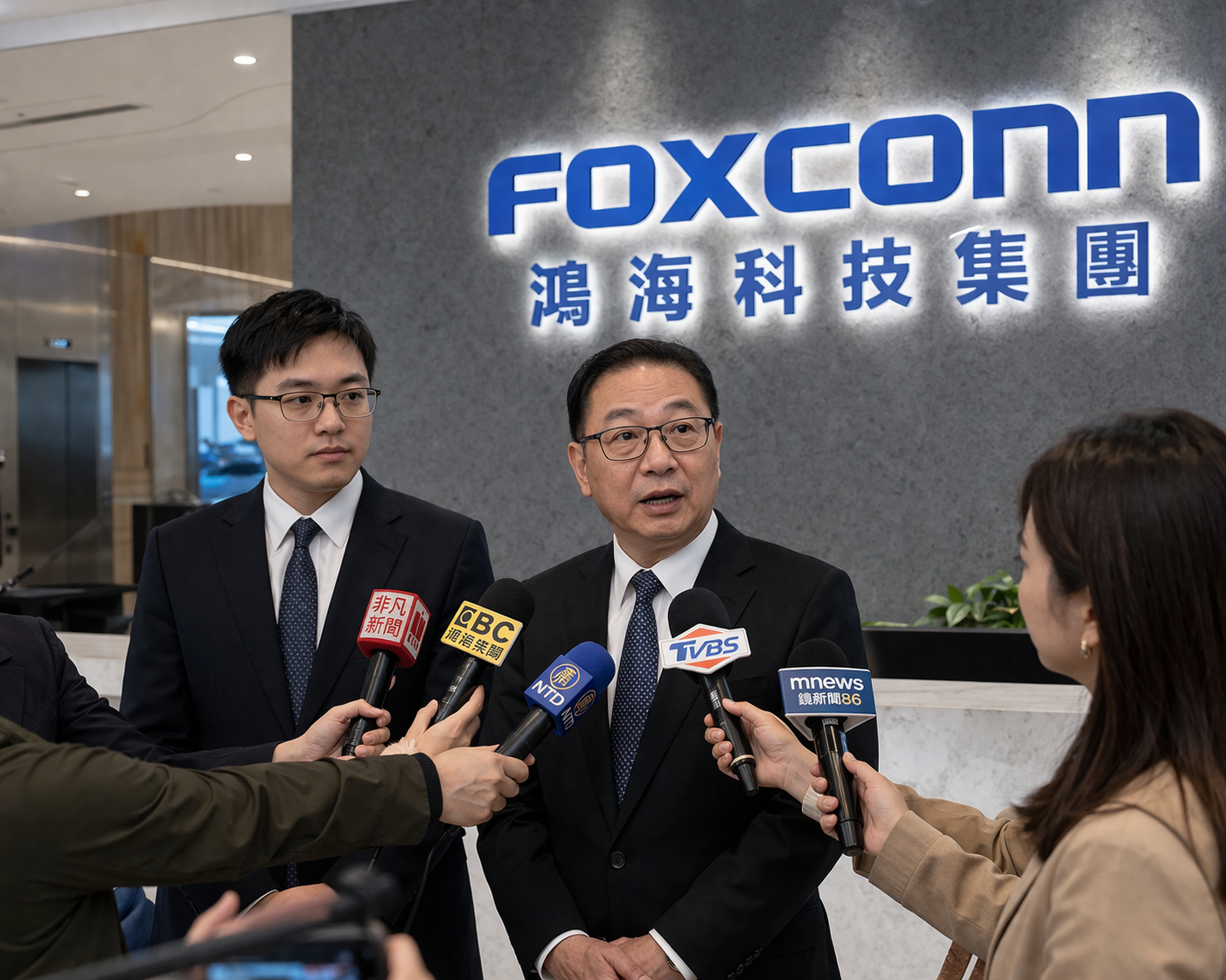
Taipei, April 5 — Taiwanese electronics giant Foxconn reported a strong rise in first-quarter revenue, driven by growing demand for artificial intelligence products, but warned that global political and economic uncertainty could affect future performance.
The company, formally known as Hon Hai Precision Industry, said its first-quarter revenue rose 29.7% year-on-year to T$2.13 trillion (about $66.6 billion). However, the figure was slightly below market expectations.
Foxconn is a key manufacturing partner for major technology companies including Nvidia and Apple, producing AI servers and assembling iPhones. The company said strong demand for AI-related products significantly boosted its cloud and networking division, while its smart consumer electronics business, which includes iPhone manufacturing, also saw significant growth due to new product launches.
The company reported that March revenue alone jumped 45.6% compared to the previous year, reaching a record high for the month.
Looking ahead, Foxconn said it expects business to continue growing in the second quarter, both compared to the previous quarter and the previous year, with strong momentum continuing in AI server products.
However, the company cautioned that global political and economic conditions remain unpredictable and could impact business performance. Chairman Young Liu recently said that geopolitical tensions, particularly the ongoing conflict in the Middle East, are among the biggest external risks facing the company this year.
Foxconn does not issue detailed numerical forecasts but is scheduled to release its full first-quarter earnings report on May 14.
Despite the strong revenue growth, Foxconn’s stock has fallen about 16% so far this year, underperforming Taiwan’s broader stock market, which has risen around 12% during the same period.
The results highlight how the global boom in artificial intelligence is driving growth for electronics manufacturers, even as geopolitical uncertainty continues to pose risks for the technology supply chain.