How One Chinese Factory Adapted to Trump Tariffs and Global Trade Turmoil
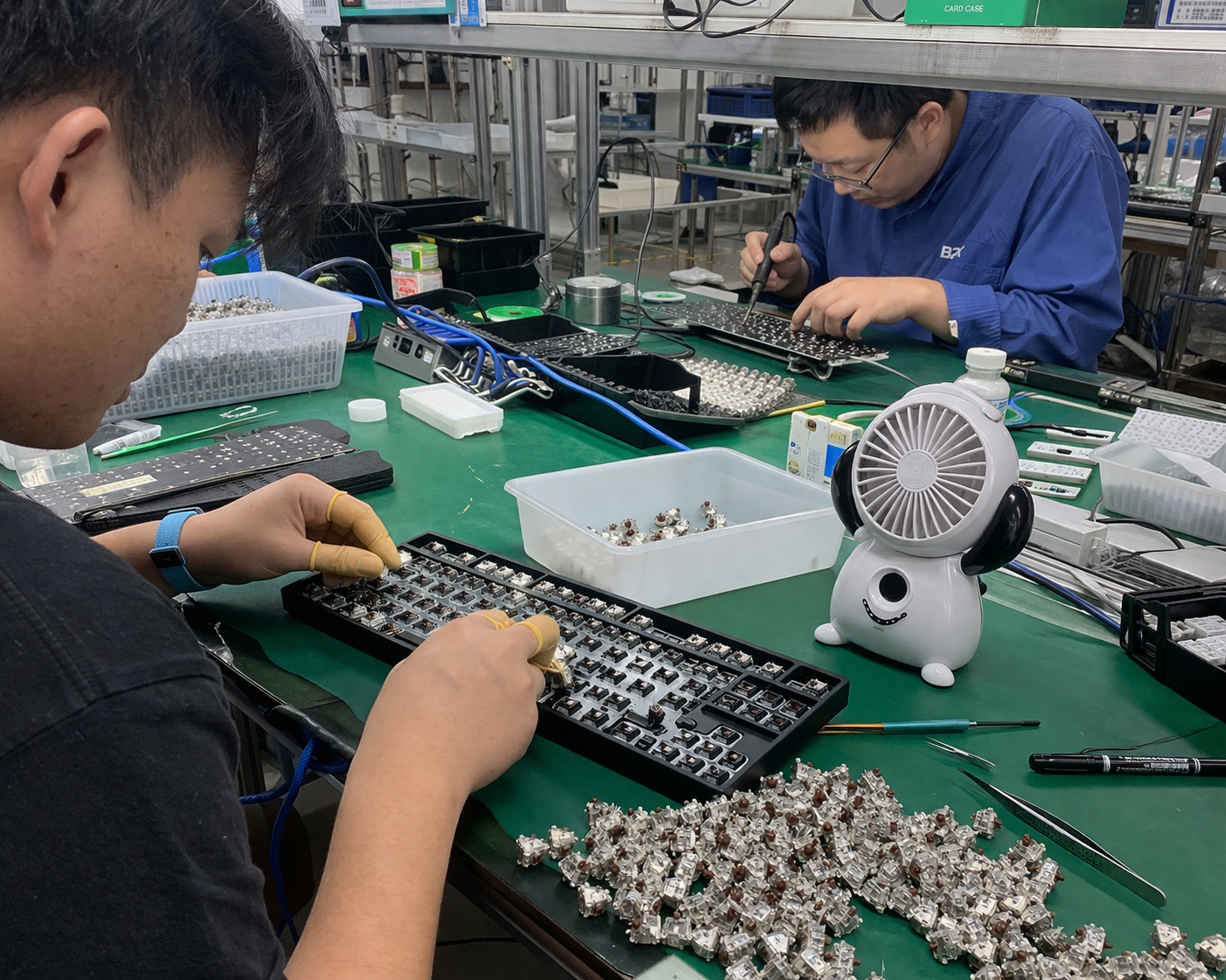
In the manufacturing city of Dongguan in southern China, one electronics factory spent the past year navigating one of the most turbulent periods in global trade. While U.S. President Donald Trump’s tariffs were designed to weaken Chinese manufacturing, the experience of electronics maker Agilian Technology shows a more complex reality: despite trade wars, rising tariffs, and supply chain uncertainty, China remains a manufacturing base that is difficult for many companies to replace.
Agilian Technology, a company that produces electronics for Western brands, depends heavily on U.S. customers, which account for more than half of its revenue. When new tariffs were introduced, many of its American clients froze orders for months and pressured the company to move production outside China. The tariffs caused widespread disruption across Chinese manufacturing, with factory activity slowing for much of 2025 and official manufacturing data showing contraction during several months of the year.
However, the situation began to shift after China responded with export controls on key minerals and metals that American companies rely on and cannot easily source elsewhere. This move helped push both sides toward reducing tariffs. By March, China’s manufacturing activity had begun to recover, growing at its fastest pace in a year. This recovery allowed Agilian to stabilize its business and reaffirm the importance of its Chinese operations, even as it explored moving some production overseas.
Despite political pressure and tariffs, the company found that moving production out of China was not as easy as many clients expected. The company explored setting up operations in India and Malaysia after customers demanded alternatives to China-based manufacturing. Some clients even asked the company to move production to the United States. But these options came with major challenges, including incomplete supply chains, higher labor costs, and slower production timelines.
In India, the company faced concerns from clients about customs delays and slower manufacturing processes. In Malaysia, early production trials showed that manufacturing took significantly longer than in China. Even in the United States, the company found that it would still need to import many components from China, which would still be affected by tariffs. These challenges showed how deeply global supply chains are still connected to Chinese manufacturing.
The tariff increases created extreme uncertainty throughout 2025. At one point, tariffs between the United States and China rose above 100 percent, causing many customers to cancel orders and leaving finished goods sitting in warehouses. The company described the period as chaotic, with clients calling late at night in panic, trying to adjust shipping plans and avoid tariff costs.
To protect itself from future trade conflicts, the company decided to adopt a “multi-country manufacturing” strategy. It began setting up operations in Malaysia and scouting industrial space in India as a backup plan. However, these facilities are being developed as insurance rather than replacements for China. The company still sees its Chinese base as essential due to the country’s strong supply chains, skilled labor, and efficient production systems.
Later in 2025, trade tensions eased slightly after meetings between U.S. and Chinese leaders led to some tariff reductions. As tariffs became more manageable, customers resumed orders. The second half of the year became the busiest production period in the company’s history, with production hours increasing significantly compared to the first half of the year.
Economic data also showed that China’s trade surplus continued to grow, even though exports to the United States fell sharply. This suggests that global supply chains are restructuring rather than collapsing, with companies shifting some production to other countries while still relying heavily on China for components and manufacturing expertise.
Today, Agilian’s leadership views the trade war not as a one-time crisis but as a long-term business risk that companies must prepare for. The company plans to continue expanding its operations in India and Malaysia to reduce risk, but it does not plan to leave China. Rising quality and lower costs for Chinese components continue to make the country an essential part of its manufacturing strategy.
The story of this factory reflects a broader trend in global manufacturing. Tariffs and political tensions are forcing companies to diversify supply chains, but China remains deeply embedded in global production networks. For many manufacturers, the lesson from the past year is clear: while production can be expanded to other countries, China is still very difficult to replace completely.
As global trade tensions continue, companies like Agilian are preparing for uncertainty by spreading production across multiple countries while maintaining their core operations in China. This strategy allows them to survive political and economic shocks while continuing to serve global customers.