Iran-Linked Hackers Breach FBI Director’s Personal Email, Leak Photos and Documents
Iran-linked hackers have reportedly breached the personal email account of FBI Director Kash Patel and published personal photos and documents online, according to statements from both the hackers and the FBI.
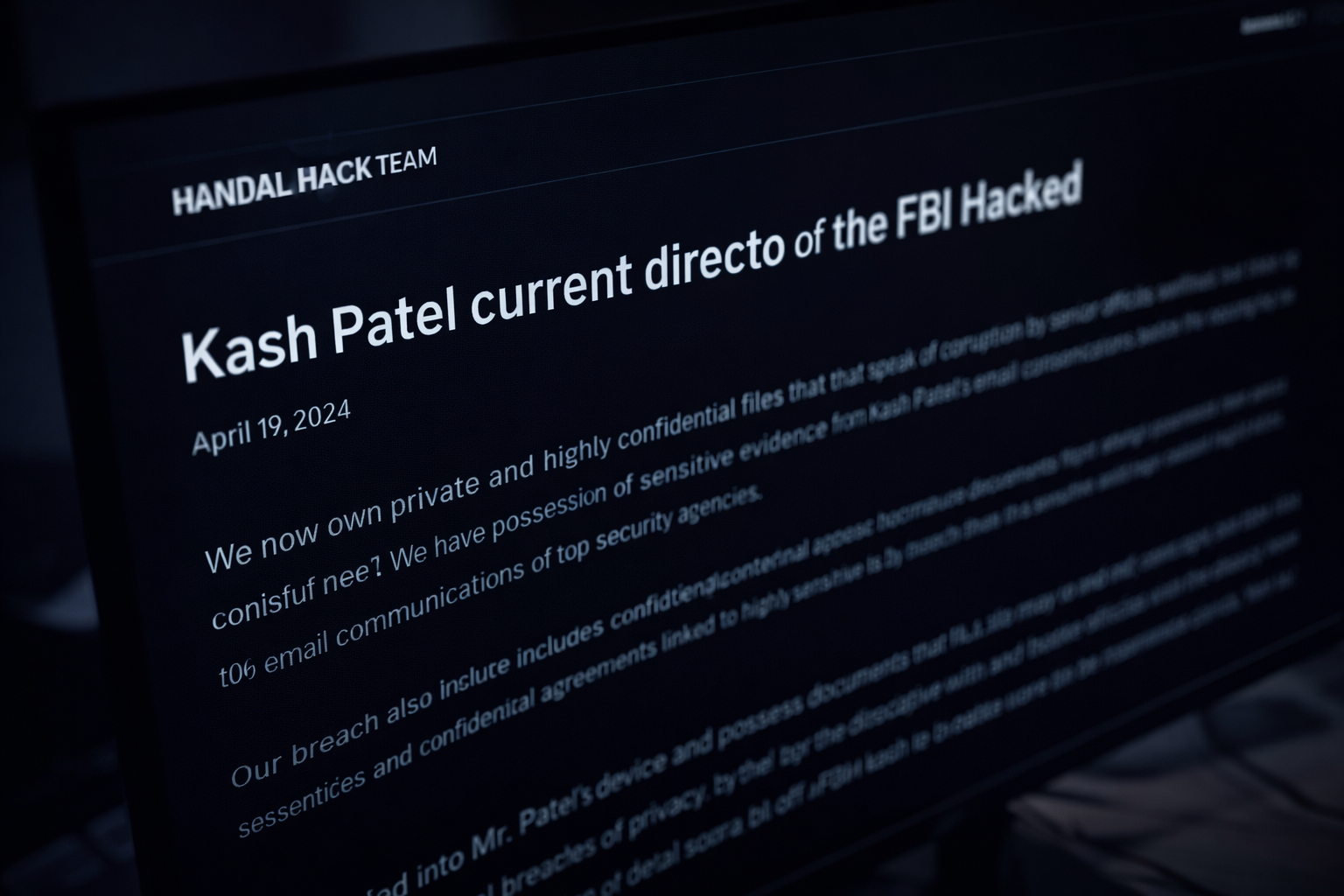
The hacker group calling itself Handala Hack Team claimed responsibility for the attack, stating on its website that Patel had been added to its list of successfully hacked targets. The group published several personal photographs along with a sample of more than 300 emails, which reportedly include a mix of personal and work-related correspondence dating from 2010 to 2019.
The Federal Bureau of Investigation confirmed that Patel’s personal email account had been targeted. FBI spokesperson Ben Williamson said the agency had taken steps to reduce any potential risks and added that the compromised data was “historical in nature” and did not contain classified government information.
Cybersecurity researchers believe Handala is one of several online personas linked to Iranian government cyber intelligence operations. The group presents itself as a pro-Palestinian hacktivist organization, but Western intelligence and cybersecurity analysts have connected it to Iranian state-linked cyber activities.
The group has recently claimed responsibility for other cyber incidents as well, including a cyberattack on U.S.-based medical technology company Stryker and a data leak involving employees of defense contractor Lockheed Martin in the Middle East. These claims have not been fully verified, but cybersecurity experts say such hack-and-leak operations are often used as part of cyber warfare and political messaging.
Security experts say the attack appears to be part of a broader strategy to embarrass government officials and create psychological pressure. Gil Messing, chief of staff at Israeli cybersecurity company Check Point, said such operations are designed to “make targets feel vulnerable” and demonstrate cyber capabilities without launching large-scale cyberattacks.
It is not uncommon for foreign hackers to target the personal email accounts of government officials because personal accounts often have weaker security than official government systems. Similar incidents have happened in the past. In 2016, hackers broke into the personal Gmail account of John Podesta, a senior political figure, and leaked emails publicly. In 2015, hackers also breached the personal AOL account of former CIA Director John Brennan and leaked sensitive information.
According to a U.S. intelligence assessment cited by Reuters, Iran and its affiliated cyber groups may be conducting low-level cyber operations in response to geopolitical tensions. These operations often involve data theft and public leaks rather than destructive cyberattacks.
There are also concerns that more stolen data may still be held by hacker groups and could be released later. In a separate case last year, another hacker group claimed it had stolen a large amount of data from political figures connected to former U.S. President Donald Trump, though that claim has not been confirmed.
The incident highlights an important cybersecurity lesson: personal email accounts of high-profile officials can be a major security risk, especially if they contain sensitive communications. Cybersecurity experts recommend using multi-factor authentication, strong passwords, and secure communication platforms to reduce the risk of such breaches.
This attack demonstrates how cyber warfare is increasingly being used not just to steal information, but also to influence public perception, create embarrassment, and send political messages.