WaterNSW Moves Ahead With Generative AI to Improve App Development and Customer Engagement

WaterNSW is moving forward with plans to expand its use of generative artificial intelligence, focusing on improving application development and customer engagement across the organization. The initiative comes after the water authority completed a major digital transformation project that shifted many of its customer transactions from paper-based processes to digital platforms. With that transition largely complete, the organization is now looking to embed AI into its operations to improve efficiency, agility, and service delivery.
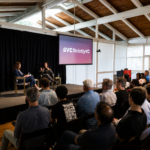
Speaking at the Pega Innovate event in Sydney, WaterNSW Chief Information Officer and Executive General Manager of Strategy and Transformation Leeanne Chau said the organization sees AI as the next step in its digital journey. The authority manages a vast network of dams and catchment infrastructure across New South Wales, and as operations become more digital, the need for faster systems and better customer interaction has become more important.
One of the main areas WaterNSW is targeting is application design and development. The organization wants to reduce the time it takes to design, prototype, and build new applications. Currently, some prototyping phases can take several months due to repeated iterations and testing. To address this, WaterNSW is exploring the use of generative AI tools such as the Pega GenAI Blueprint platform. This low-code platform uses AI to help organizations design workflows and modernize older software systems more quickly.
The platform works by analyzing existing software code, business rules, and documentation, and then automatically recreating workflows in a more modern application environment. This approach, often referred to as prompt-based engineering, allows developers to describe what they want in natural language, and the AI helps generate the application design and workflow structure. By using this approach, WaterNSW hopes to significantly speed up its development cycles and improve its ability to respond to changing business needs.
The second major focus area for WaterNSW is customer engagement. The organization plans to use AI-powered virtual assistants to provide both staff and customers with instant, accurate, and consistent information. This is particularly important for WaterNSW because it operates in a highly regulated environment where providing correct and consistent information is critical.
WaterNSW is exploring tools such as Pega’s generative AI Knowledge Buddy to support this initiative. Internally, the AI assistant is expected to help employees quickly find information from the organization’s large knowledge base, reducing the time spent searching through documents and policies. This could improve productivity and help staff make faster decisions.
Externally, the organization plans to use conversational AI to improve how customers interact with WaterNSW services. Many of WaterNSW’s customers, particularly farmers and regional users, increasingly rely on smartphones and digital platforms to manage their accounts, access information, and communicate with the authority. By introducing AI-powered conversational assistants, WaterNSW aims to make it easier for customers to ask questions in simple language and receive clear, accurate responses instantly.
This move reflects a broader trend among large organizations that are shifting from traditional keyword-based search systems to conversational AI interfaces. Instead of searching through websites or documents, users can simply ask questions and receive direct answers, improving user experience and engagement.
WaterNSW emphasized that its interest in AI is not only about large-scale transformation but also about making small, incremental improvements across the organization. The authority sees generative AI as a tool that can gradually improve internal processes, speed up development, enhance customer service, and support staff in their daily work.
As organizations across industries continue to adopt generative AI, WaterNSW’s approach highlights how public sector and infrastructure organizations are also beginning to explore AI to improve operational efficiency and customer service. By focusing on application development and customer engagement, WaterNSW is positioning itself to become more digitally agile and responsive in the coming years.